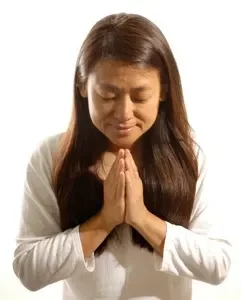
Photo provided by Master Chufei Tsai
Master Chufei Tsai is an appointed Taoist and Tibetan Buddhist Master from Taiwan and a renowned educator, healer, and spiritual leader.
On Patience, Service, and Bringing Eastern Philosophy West
In 2000, during a visit to her parents in Miami, Master Chufei Tsai made a phone call that changed the course of her life. On the other end of the line was her teacher, a yogi living in the Himalayan mountains. After hearing her voice, he offered simple instruction: “Stay in America. Teach Americans.”
Tsai hesitated. The task felt daunting. She had already founded an institute in Taiwan, where she was appointed as both a Taoist and Tibetan Buddhist master. Relocating to the United States meant translating centuries-old Eastern spiritual teachings for a Western audience accustomed to speed, productivity, and individual advancement.
She stayed.
In the years that followed, Tsai founded Zab Sang Institute and later The Zen Village Educare Center in Coconut Grove, a space dedicated to meditation, leadership training, holistic wellness, and community education. Her work blends Eastern philosophy with practical application, emphasizing patience, service, and internal balance.
In conversation, Tsai speaks calmly but directly. For her, spirituality is not abstraction. It is practice.
A Space for Rest in a Culture of Speed
Zen Village was designed as a place for reflection in the midst of what Tsai sees as an overstimulated culture.
“When one is practicing a spiritual path, it is important to seek new and nurturing environments,” she explains. “In life, we are constantly thinking, doing, acting. Rest and reflection are truly needed.”
The center offers meditation, Tai Chi, Qi Gong, prenatal wellness training, executive leadership programs, and internal energy courses such as Inner Feng Shui. Many programs are geared toward educators, therapists, managers, and professionals who serve others.
“Helping those who help others is my main focus,” Tsai says. “If teachers, therapists, and leaders are not balanced themselves, their work becomes overwhelming.”
Her nonprofit initiative, Heart for Humanity, extends this philosophy into the broader community, offering free training and holistic services to children, families, seniors, and mental health professionals.
East Meets West
One of Tsai’s most consistent themes is the cultural contrast she observes between Eastern and Western societies.
“In the West, people often focus on what can benefit them,” she says. “In the East, we are taught to offer what we have to others first.”
She gives a simple example. At meals, elders are served before oneself. The act is not symbolic. It is habitual.
“When you focus on others, things come to you naturally,” she adds. “Only in giving can we receive.”
Tsai acknowledges that this perspective can feel counterintuitive in a society that emphasizes self-advancement. Yet she believes the imbalance contributes to stress, competition, and disconnection.
On Equality and Individual Roles
When asked about Western movements for equality, Tsai responds from a philosophical rather than political standpoint.
“We are absolutely equal,” she says, “but we are also very different.”
For Tsai, conflict arises when equality is interpreted as sameness. Spiritual maturity, she argues, requires understanding one’s individual role rather than competing for identical outcomes.
“It is more important to find out who we are and what roles we play,” she says. “When we understand our unique place, we can act with balance and joy.”
Her emphasis remains on internal cultivation rather than external struggle.
Patience as Practice
Above all, Tsai returns to the concept of patience.
“In Western culture, people want immediate results,” she says. “But most good things take practice.”
Meditation, in her view, is not a retreat from daily life but a discipline woven into it. One need not withdraw completely to cultivate awareness.
“If you practice peace in your actions, you do not need much time off,” she says. “Even as we have this interview, I am practicing meditation.”
For Tsai, spirituality is not separate from work, family, or leadership. It is integrated.
A Philosophy of Service
Whether teaching executives, supporting mothers-to-be, or training future instructors, Tsai’s message is consistent: cultivate awareness, serve others, and slow down.
In a culture defined by acceleration, her philosophy centers on restraint. In a society driven by individual gain, she emphasizes contribution.
Her decision to remain in America two decades ago may have felt like a challenge. Today, her work reflects a deliberate effort to bridge worlds — not by rejecting Western life, but by inviting it to pause.
How you can help:
You can volunteer for the many community service and holistic health care programs, or donate to support the centers programs for children, parents, and teachers by contacting the Zen Village Educare Centre at 305–567–0165 or emailing info@thezenvillage.com. Zen Village Educare Center is a 501c3 (nonprofit) organization.
Originally published in Being Magazine, a print magazine in South Florida.
