Feature Article | Lifestyle / Sustainability | Original Narrative
Social Media Posts (below article)
Published in print in Southern Neighbor Magazine
This article explores the uniquely rich coffee culture of Chapel Hill, Carrboro, and Durham, with a focus on the region’s commitment to high-quality, sustainably sourced coffee. Through firsthand reporting and interviews with local roasters, the piece reveals how independent cafés and specialty importers are redefining what coffee can be — from farm to cup.
The story blends narrative travel writing with in-depth profiles of Counter Culture Coffee and Carrboro Coffee Company, illustrating how sustainable farming, direct relationships with producers, and artisanal roasting practices shape the tastes and experiences of local communities.
This piece demonstrates:
Narrative feature writing rooted in observation and experience
Reporting grounded in interviews with subject-matter experts
Ability to contextualize sustainability within lifestyle culture
Skill in balancing descriptive prose with informative content
One day, while hiking through Chapel Hill, I noticed a small flyer tacked to a tree with a hand-drawn arrow that read, “To coffee and wine.” Curious, I followed the path uphill through an old-growth forest. At the top, I emerged behind a hidden café tucked among the trees — magical, charming, and my first introduction to Caffé Driade.
Currently, I’m enjoying the afternoon with swirling techno beats and colorful, psychedelic art at the Open Eye Café. Who can resist the camaraderie of children running around, business meetings going on, groups of friends laughing and lounging on the couches and singles, like me, buried deep in their computers? The Open Eye definitely deserves its name, "Carrboro's Living Room". I spend more time in this living room than my own.
In addition to the amazing coffee shops like Caffé Driade, 3 Cups and Open Eye, the area offers quality coffee at a number of restaurants from Peppers, Margaret’s Cantina and Glass Half Full among many others, to the Weaver Street Co-ops and specialty, gourmet stores like A Southern Season.
It’s no accident that the coffee in town is spectacular. Few people realize we have two local roasters committed to sustainability and craft.
“Most people think of coffee as a beverage, a bean, a commodity or even a drug,” says Peter Giuliano, coffee connoisseur, evangelist, Director of Coffee and Co-Owner at Counter Culture Coffee. “Yet those same people are well-versed in food production. They want to know if their food is local, organic and high quality. Who wouldn’t rather have a rich, juicy, heirloom tomato grown by farmer Bob down the street and sold at the local co-op or farmer’s market than a mealy, flavorless, genetically modified tomato from a corporate superstore? Coffee should be the same way; I say should because most people don’t think about it in that light. Coffee is a seasonal fruit and if this fresh produce is grown, handled and prepared with care, it is also a fine culinary experience.”
Counter Culture Coffee is located in Durham and world renowned for their high quality coffee roasting. People visit from all over the globe to tour their roastery, learn about sustainable coffee practices and attend their free weekly tastings, also known as ‘cuppings’. They boast the tagline, “We’re not trying to change the world, just the way it thinks about coffee”.
“Many people don’t realize that fresh coffee has a rich array of flavors, from apricot and blueberry to chocolate and ginger, without any additives at all,” says Peter while holding a handful of fresh, oily beans underneath my nose.
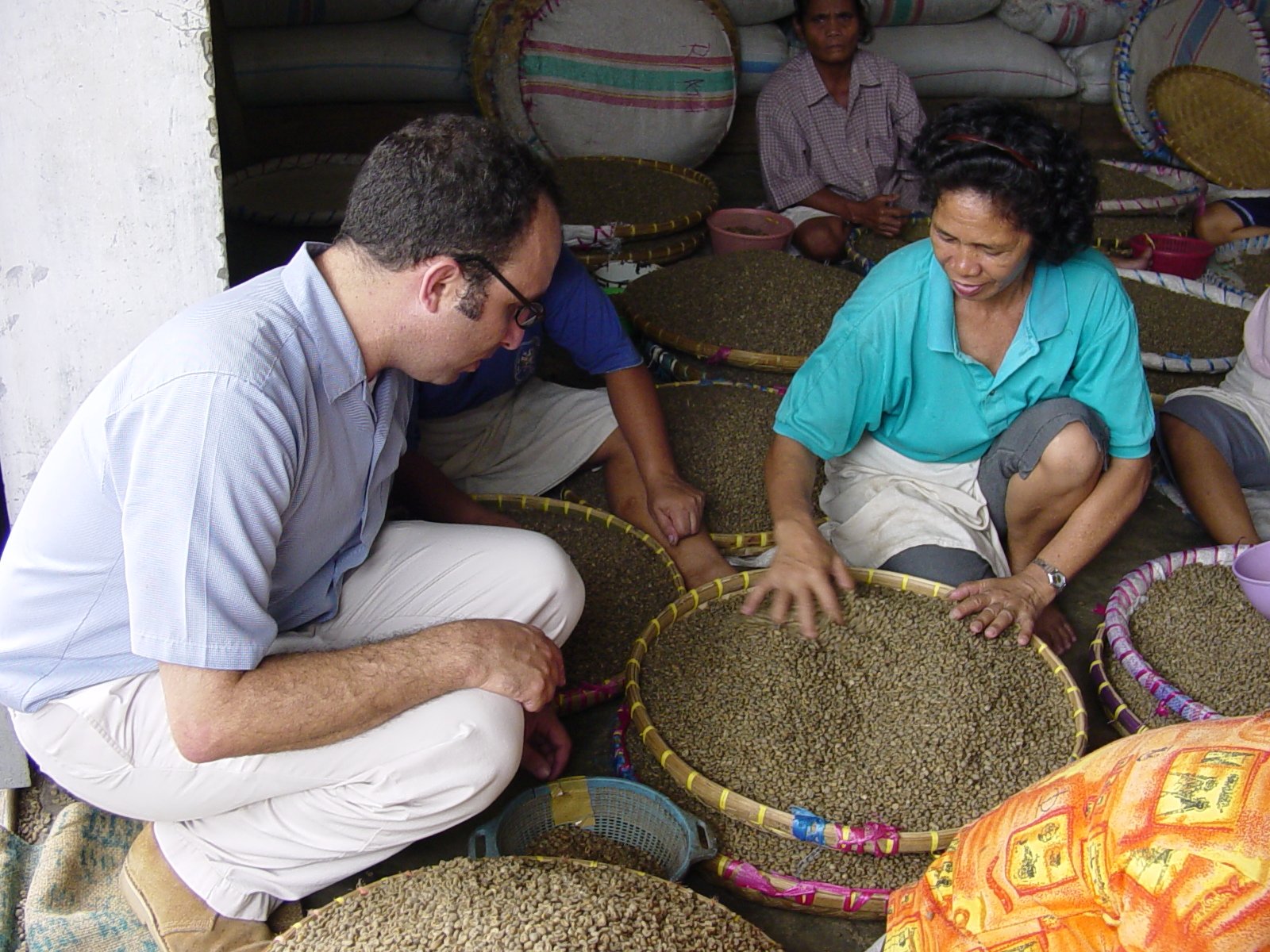
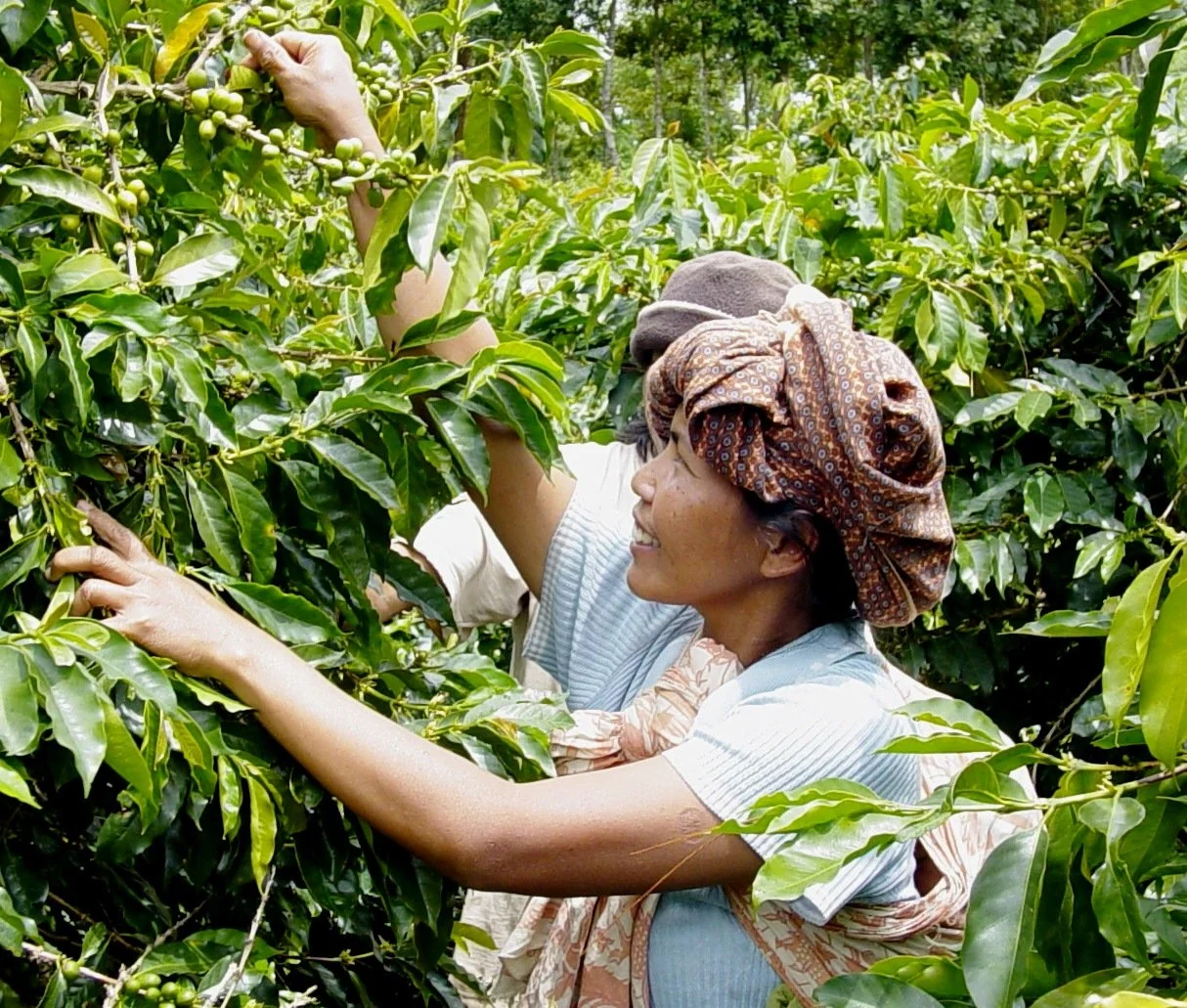
From talking to Peter I learn about his travels to foreign lands to find the best coffee farms and how Counter Culture helps these small farmers learn about sustainable farming methods and become certified organic. I learn how closely they work with A Southern Season by supplying them with fresh coffee and collaborating on monthly posters that highlight the coffee and coffee farmers to help educate the public and help them form a personal connection to their coffee. I also learn that coffee is seasonal; in the spring great coffee has light, fruity and floral fragrances and in the winter it has an earthy, rich aroma.
Counter Culture isn’t the only roaster in the area. When you drink coffee at Café Driade and Open Eye Café it’s roasted by the Carrboro Coffee Company.
“We are a small-batch roaster,” shares Scott Conary, co-owner of Caffe Driade, Open Eye Café and the Carrboro Coffee Company. “In our roasting facilities we never roast more than twenty-five pounds at a time to ensure that our coffee is of the highest quality.”
Carrboro Coffee Company is newer and smaller than Counter Culture, but they have the same goals of sustainability, fairness, high quality and education.
“We carefully source from all over world by traveling and working directly with the farmers and co-ops, as well as attempting to increase coffee quality knowledge and technical skills,” says Scott. “Our goal is to increase sustainability through directly interacting with the farmers and making sure they are fairly compensated when they are in line with the quality standards we are looking for.”
The Chapel Hill, Carrboro and Durham areas are extremely lucky. Our local coffee roasters build strong, global community relationships with farms all over the world, from Papua New Guinea, Ethiopia and Rwanda, to Honduras, El Salvador and Nicaragua. They aren’t just sourcing coffee from these areas; they are deeply involved in all aspects of these farms.
“In the coffee industry we have a unique ability to directly affect both our own local economies and those around the world, so we aim to do it for the good of all,” says Scott. “Roasting is truly as local as coffee can get in this country, so this is where it truly becomes a local point of pride.”
Scott at Carrboro Coffee Company and Peter at Counter Culture Coffee both sing the praises of knowing the farmers, working within the global coffee communities and educating the food industry and public about quality coffee. After our conversations I think about coffee in a much different light. I always bought organic, but I never thought of it as a seasonal, farmed produce and I never knew it could smell and taste like blueberries!
This year Carrboro Coffee Company is expanding their offerings this year to include hands-on technical classes for espresso and brewing equipment, along with history, info and tastings to help educate the public. The training room is located in the Open Eye Café. You can look to their website for more information.
Counter Culture Coffee also welcomes the public to their facilities every Friday at 10 a.m., rain or shine, for free ‘cuppings’ of their latest finds. You can find their weekly ‘cupping’ notes on their website, along with a very interesting blog and profiles on the farms and farmers they work with. They also have training centers in Asheville, Charlotte, D.C. and Atlanta.
As I’m leaving Counter Culture, Peter bags some freshly roasted coffee beans from Kenya and Papua New Guinea. I can hardly wait to get home and brew it, but at the same time, I can hardly wait to come back to try the newest flavors of the week. If you’d like to enjoy a free morning of delicious coffee, learn how to make a perfect brew, and delight your palate with flavors you didn’t know existed in coffee, drop by Counter Culture on any Friday.
“There’s nothing more exciting than introducing people to really great tasting coffee,” says Peter. “That’s what we live for.”
The next time you pick up a cup in Chapel Hill or Carrboro, you’re not just drinking coffee. You’re tasting the work of farmers across continents, roasters down the road, and a community that cares deeply about what ends up in your mug.
Social Media Posts:
Hook:
A cup of coffee is rarely just a cup of coffee.
Caption:
While writing about coffee culture in Chapel Hill, Carrboro, and Durham, I began to see coffee differently. Not as a habit or a commodity, but as an agricultural story shaped by soil, climate, and human relationships.
Local roasters like Counter Culture Coffee and Carrboro Coffee Company work directly with farmers across the globe, supporting sustainable practices and fair compensation while educating their own communities at home.
Each cup carries traces of geography, craft, and care.
CTA:
The next time you drink coffee, pause for a moment. Consider where it came from and who helped bring it to your mug. Awareness can turn routine into connection.
LONG FORM POST
Caption:
One afternoon, hiking through Chapel Hill, I followed a small handwritten sign that read, “To coffee and wine.” It led me uphill through trees and into a hidden café tucked into the forest. That unexpected discovery became the starting point for a deeper exploration of the region’s coffee culture.
What I found was not simply a collection of charming cafés, but a network of relationships that extends far beyond the local community. Roasters like Counter Culture Coffee and Carrboro Coffee Company work closely with farmers in Ethiopia, Rwanda, Honduras, Papua New Guinea, and beyond. These partnerships support sustainable farming methods, fair compensation, and long-term knowledge sharing.
Conversations with the roasters revealed coffee as a seasonal agricultural product shaped by soil, climate, and careful cultivation. The flavors we experience in a cup are the result of ecosystems, human labor, and thoughtful processing. This perspective reframes coffee from a daily habit into a global collaboration rooted in land and livelihood.
The cafés themselves reflect that connection. Spaces where students study, families gather, artists linger, and travelers pause. Local coffee culture becomes a meeting point between global agriculture and community experience.
Writing this piece changed how I taste coffee. It is no longer just a drink. It is a story of farms, forests, travel, and people working across continents with shared purpose.
CTA:
Next time you sit in a café, look beyond the cup. Notice the community around you and the global networks behind the beans. Small moments of awareness can deepen our understanding of the systems we participate in every day.
Hook:
Coffee is seasonal. Coffee is agricultural. Coffee is relational.
Caption:
One conversation with a local roaster shifted my perspective entirely. Coffee is a fruit grown in ecosystems across continents, influenced by rainfall, soil health, and farming practices long before it reaches a café.
Sustainable sourcing and direct relationships with farmers create not only better coffee, but stronger global communities rooted in respect and shared knowledge.
CTA:
Ask your local café about the origin of their beans. Curiosity supports transparency, and transparency supports sustainability.
LONG FORM POST
Caption:
Before researching this article, I thought of coffee primarily in terms of preference. Light roast or dark roast. Café or home brew. That perspective shifted after speaking with roasters whose work connects local communities to farming regions across the world.
Both Counter Culture Coffee and Carrboro Coffee Company emphasize direct relationships with farmers, sustainable growing practices, and education as core parts of their mission. Their work highlights how agriculture, environment, and economy intersect. Supporting sustainable farming not only protects ecosystems but also strengthens livelihoods and preserves knowledge passed through generations.
Even the roasting process reflects care. Small batch roasting allows for quality control and honors the unique characteristics of each harvest. Flavor becomes a reflection of place. A reminder that agriculture carries identity and history.
What stood out most was the role of education. Free tastings, classes, and farm profiles help consumers form personal connections to coffee’s origins. This transparency encourages more thoughtful consumption and greater appreciation for the environmental and human factors shaping each cup.
Stories like this reveal how everyday rituals can hold deeper meaning. Coffee becomes a bridge between local gathering spaces and global agricultural landscapes. Between personal habit and collective impact.
CTA:
Consider choosing one product in your daily routine and learning its story from origin to table. Understanding these connections can inspire more mindful choices and a deeper sense of global community.
